5 May 2026
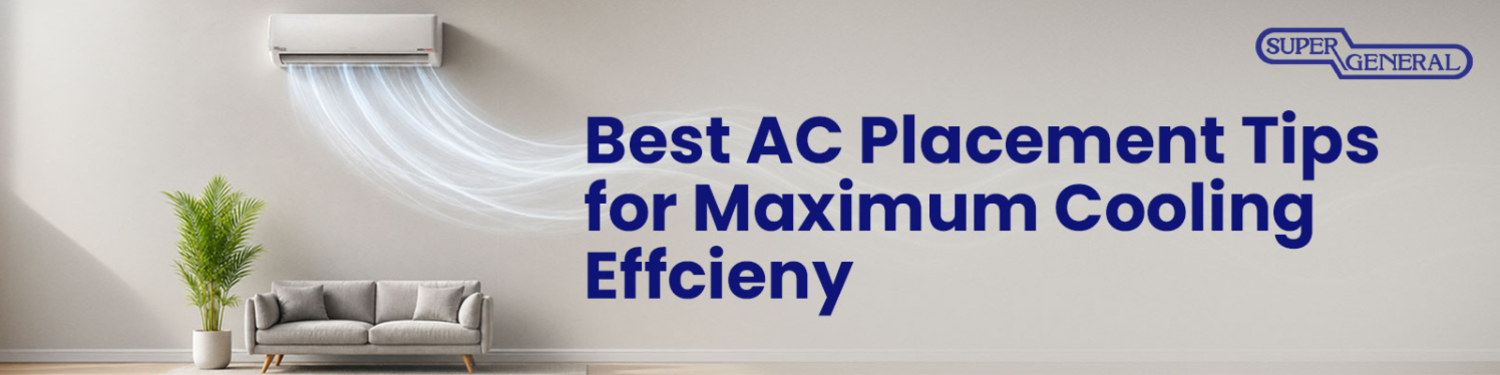
Getting AC cooling efficiency right starts with where you place the unit. When the indoor unit has clear space and sits at the right height, the room cools more evenly. The DOE says blocked airflow and poor maintenance reduce performance, while ENERGY STAR notes that the unit should match the room for best comfort.Super General's AC range includes split, window, portable, floor-standing, cassette, duct-type, and air-curtain models.
Poor placement keeps the unit cool against a wall, corner, or piece of furniture, rather than moving air through the room. That usually means slower cooling, uneven comfort, and higher bills. Good split AC installation tips start with the room layout.
Curtains, cabinets, and tight corners can trap cool air before it spreads. TCL recommends 10 to 15 cm of open space around the top and sides of a split indoor unit, and Daikin says airflow and easy access matter for maintenance.
Good airflow direction helps cool air travel across the room instead of hitting one spot. TCL notes that a higher indoor placement helps air spread better.
For most split units, place the indoor unit high on a strong wall with the clearance the manufacturer recommends. LG says a split AC can be installed on any wall, but the proper distance matters for efficiency and noise.
Keep the unit away from direct sun, lamps, televisions, and other heat sources. The DOE warns that nearby lamps or TVs can cause the thermostat to run longer, and Daikin says direct sunlight can make the outdoor unit work harder.
When deciding where to place an air conditioner in a bedroom or living room, choose a central wall with a clear path for air. Avoid spots that face a cupboard, thick curtain, or divider wall.
Set the louvers so air moves across open space, not straight into an obstacle. Super General split AC models include 4 Way Swing, Auto Restart, Eco Mode, and Turbo Mode on selected units.
When people ask how to improve AC efficiency, I start with the basics: close doors, seal the room, and reduce extra heat. ENERGY STAR says the most efficient unit is the one matched to the room size, and the DOE says insulated, air-sealed homes help air conditioning work better.
Dirty filters reduce airflow and lower performance. The DOE says regular maintenance of filters, coils, fins, and refrigerant lines is essential because clogged parts force the AC to work harder.
Heavy curtains or blinds help block heat from sunlight, while caulk and weatherstripping help seal air leaks around doors and windows. The DOE recommends sealing leaks to help cooled air stay inside longer.
One of the easiest AC energy-saving tips is to set the thermostat as high as comfortably possible. The DOE also says not to set it colder than necessary, because it won't cool the room faster.
Most AC cooling problems come from blocked airflow, dirty filters, poor placement, or a room that leaks cooled air too quickly. ENERGY STAR also notes that a unit that is too large can feel damp and uncomfortable.
If your air conditioner's not cooling issue starts suddenly, check the filter, thermostat setting, and whether the indoor or outdoor unit is blocked. The DOE says clogged filters reduce airflow, while Daikin says the outdoor unit needs a clear, ventilated space to release heat properly.
Call a professional when cleaning does not help, the unit keeps short cycling, you notice water leakage, or the room still cools unevenly after a placement check. LG recommends professional installation, and TCL says the correct distance and spacing affect reliability.
The right placement, clear airflow, regular filter cleaning, and a well-sealed room all work together to improve performance and lower energy use. If you are choosing a new unit, Super General's AC lineup offers options for a range of room sizes and configurations. Follow the installation guidance for your room and model.
COPYRIGHT © 2026 SUPER GENERAL. ALL RIGHTS RESERVED
LOOKING FOR SERVICE?